Why You Shouldn’t Mow Wet Grass

Experts in any country in the world will unanimously tell you that you should not mow wet grass. This can lead to a number of minor and serious problems, including equipment malfunction and subsequent diseases of the lawn itself, which, as you will agree, is something we really do not need. Mowing can lead to the formation of clumps of grass, which will subsequently lead to the appearance of fungus. Not to mention the fact that it is almost impossible to achieve an even cut with wet grass.
Life flies by quickly and sometimes there is simply no time for special deliberations. The grass just has to be mowed. Not to mention commercial grass mowing. In this area, people do not even consider our question. A rainy region and hundreds of other factors can influence your decision about mowing wet grass. Fortunately, experts in the field have come up with numerous techniques and tips. They will help you get the job done and not give up. We will talk about them very soon.
If you don't find yourself on the short list above, try to avoid wet lawns in every way possible. Therefore, the best option is to leave it alone for a while and return to it when it is dry.
Why Cutting Wet Grass Is a Bad Idea
Even if you manage to avoid major problems such as damage to your lawn or equipment, you will definitely clog many lawnmower parts with grass. Cleaning it out will be quite difficult.
Wet grass also actively affects the performance of the blades. They may stop spinning in the middle of your work, and you will have to clean them thoroughly before continuing. All of this adds extra work hours to your life. And these are the direct consequences of your decision to cut wet grass.
Notice: Also keep in mind that each such mowing will worsen the overall condition of your lawn. The situation can become catastrophic when using commercial lawn mowers. If the soil is sufficiently soft, you can damage the lawn to such an extent that it will simply be beyond recovery.
If cutting wet grass is unavoidable, take into account all the features of the terrain and the equipment you are using to do the work.
What Happens If You Cut Wet Grass? Key Risks Explained
In dry weather, a standard walk-behind lawn mower has a specific operating sequence. To put it simply: the blades cut the grass evenly and confidently, then it travels a short distance and is ejected into a bag (or another option of your choice). In wet conditions, this pattern breaks down and the grass begins to stick firmly to the inside of the machine.
After mowing a wet lawn, you may encounter:
-
the equipment will become heavy and difficult to operate
-
the likelihood of diseases spreading throughout the lawn
-
you will be unpleasantly surprised by the quality of the mowing
-
And one more thing... We do not recommend wearing new sneakers for this procedure.
Notice: It is strongly discouraged to use string trimmers in wet weather. With this type of open lawn mower, there is a risk of electric shock.
Uneven Cutting & Lawn Damage
Water droplets that accumulate on each blade of grass pull it down and do so with varying degrees of force. As a result, all the strands of grass end up at different heights, and you get an uneven cut. This can only be compared to cutting with crooked scissors. Once the lawn dries and the blades of grass straighten up, the situation will look even worse. Characteristic brown tips may also appear. And you will have to do all the work again. That's why should you not cut grass when it's wet.
Increased Risk of Lawn Diseases
As with the human body, lawns are susceptible to a range of diseases. More specifically,in the case of lawns, there is a whole list of fungal diseases. One of the reasons for their appearance is unsuccessful mowing, when the grass is not cut but pulled out:
-
brown patch
-
anthracnose
-
leaf spot
-
red threat
These diseases kill the grass, simultaneously coloring it in one of the characteristic tones. In some cases, the color is reflected in the name of the disease itself.
If you don't want any of these plants growing on your lawn, you need to:
-
do not mow damp grass by any means
-
If you do decide to do this, clean the deck and other parts of the mower thoroughly afterwards. That is where these infections come from.
Clumping & Thatch Problems
Is it bad to mow when the grass is wet? Well, the problems can go even further, because you can damage the soil itself. After you work on it, the ground gets packed down, and for plants and grass, that means it's harder to get oxygen. It starts to thin out, or you might even get bare patches on your lawn.
Another difficulty concerns clumps of already mowed wet grass. This, in turn, acts as a powerful blocker: for sunlight, water, and air. All of these are vital for the lawn. Consider all this when thinking is it okay to cut wet grass…
Expenses and gas consumption
One less obvious factor is increased fuel consumption by the equipment. This is due to wet debris. It accumulates in the mower bag, making it significantly heavier. As a result, the equipment starts to move more slowly. The equipment requires more effort to operate, and in turn begins to consume large amounts of fuel.
Can You Mow Grass After Rain? How Long You Should Wait
The answer lies within a range of several hours to 24 hours. Of course, much will depend on the season you are in, as well as the duration of the rain. If it has been raining for several days in a row, the soil will obviously need more time.
Notice: One of the non-standard rules states the following. If the road surface next to the lawn is completely dry, then you can get to work.
But it is better to check the condition of the grass itself. Bend down to the lawn and check how wet the cover is and whether the stems are springy. If they immediately return to their original position, then they are already dry and ready for mowing.
You can also walk on the lawn, either barefoot or with shoes on. In any case, if you leave noticeable footprints behind, then you have just learned should you mow after rain or not.
How Wet Grass Affects Your Lawn Mower
The main danger is posed by water itself, which can and will inevitably get into various parts of the equipment. For example, it can get into the fuel tank, which will subsequently lead to engine malfunctions. Still, is it okay to cut grass when it's wet?
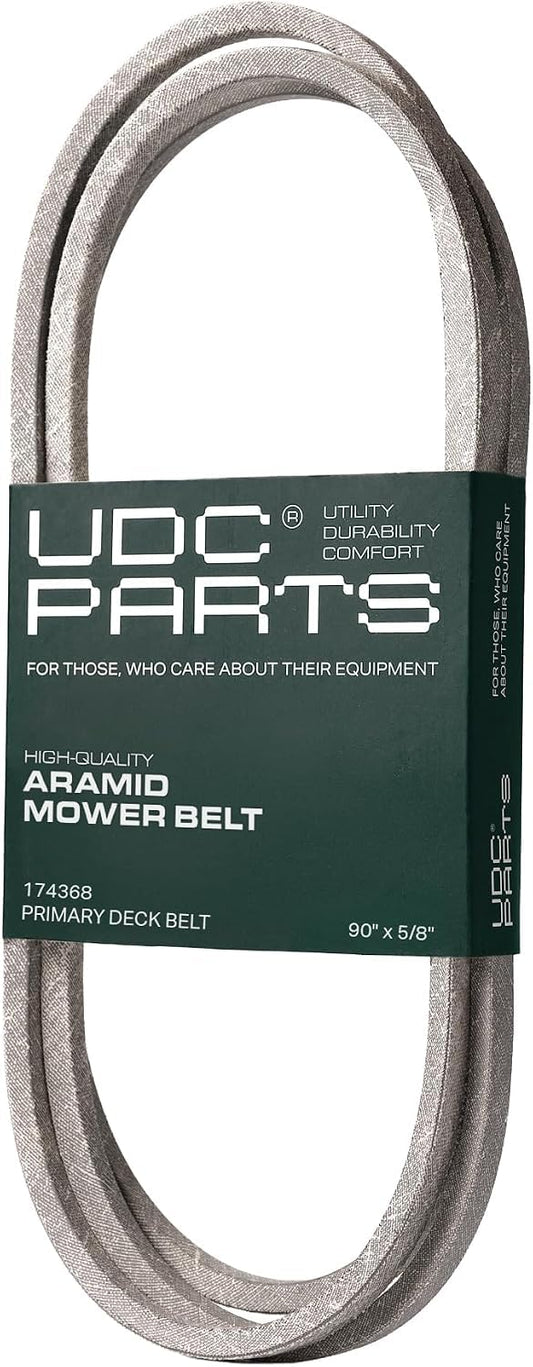
Well, during wet grass mowing, the blades will rotate with much greater effort, which will again put a heavy load on the engine, which it may not be able to cope with. Anything can break, like a belt. Drive belts and deck belts made from super durable stuff like keramid/kevlar are still only meant to handle certain loads. Electric lawn mowers, which don't handle increased loads very well, are worth mentioning separately.
Corrosion is another risk that is quite high. Wet grass clippings will stick to your mower after you finish mowing. And they can start to affect its metal components. The main problem is that if the frame of the machine breaks down, you will have to replace it completely. Mowing damp grass can be one of the baddest decisions in your life.
Why Choose UDC Parts for Lawn Mower Maintenance and Parts?
At UDC Parts, we strive to be a leading company in everything related to direct customer service. This includes offering fast delivery throughout the United States. Just three days after placing your order, you will receive your goods. In the event of damage to equipment or consumables, these terms can be truly critical for you. If a decision has been made, can you cut grass when it's wet?
We also offer a wide range of aftermarket spares. High proven quality, complete versatility, and compatibility with just about any lawn mower on the market. All you need to do is use the search function on our website and enter your specific model. Blades that can become dull after a few passes on wet grass will be of primary interest to you.
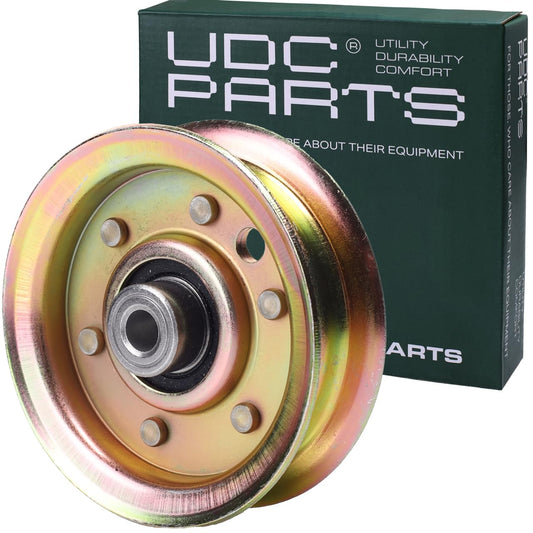
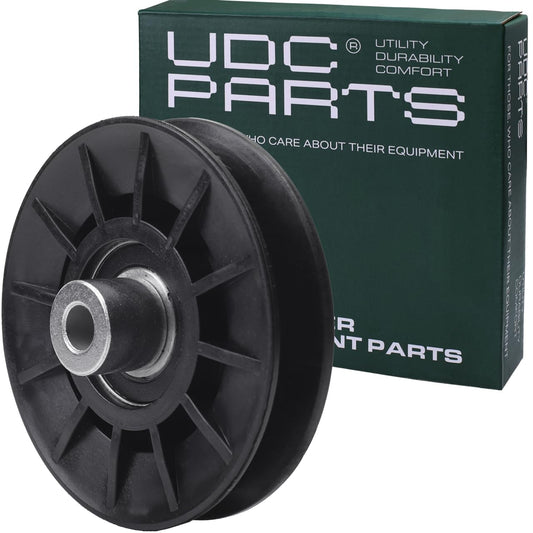
Still, can you mow grass in the rain? At this point we also offer consumables that will help fix virtually any basic breakdown of your equipment. Here is the complete list:
We are confident that you will find the part you need at a price and other conditions that suit you.
How to Cut Wet Grass Safely (If You Really Must)
Life throws up all sorts of situations. For example, you've been on vacation and now you're going on a business trip. You only have one day and you simply can't leave your lawn in terrible condition. Accepted. Experienced users have a few tricks up their sleeves for situations like this. Here's what they do:
-
Check the waste bag. We will use this specific type of collecting waste, and it must be completely empty.
-
Raise the deck to the maximum possible height. This will prevent the engine from stalling at high revs and will generally reduce the load on it slightly.
-
Inspect the blades. Ideally, they should be new or have been sharpened recently.
Notice: After this brief inspection, you can slowly advance onto the lawn. Right on the battlefield (and there's no other way to describe what's happening), there are a few more tricks that will help you get out with minimal losses.
-
Slow down your walking pace compared to your usual pace. This will again reduce the load on the engine a little. You can also reduce the amount of grass you mow in a single pass. Try to leave one side of the already mowed area untouched. This will help the engine and reduce the amount of grass clumps.
-
Try to stay away from tarmac and similar surfaces. Believe me, it's better to leave small patches of uncut grass than to have to scrape dried grass off the paths a few days later.
Notice: After completing the work, there is only one more step to take, but it is extremely important.
-
Rake up all the scraps and clumps of grass left on the lawn and remove them. This will allow the soil to breathe, which is essential for a healthy lawn.
Not so easy? Another reason to think about the question: is it good to cut grass after rain?
Types of Mowers vs. Rain
|
Type of Mower |
Efforts |
Effectiveness |
Risk of soil compaction |
|
Self-Propelled |
Moderate |
Precise handling on your part, but high probability of clumping. |
There is a slight risk of rutting. |
|
Riding |
Law |
There will be enough power for good performance, but there will still be lumps. |
High risk of damage to grass cover. |
|
Robot |
None |
Depending on how often you use it. The more often, the better it works. |
Unlikely risk. |
As can be seen from the chart, robotic lawn mowers may be a rather interesting choice for working with wet grass. Their main advantage is that they exert minimal physical pressure on the lawn and soil. There are currently a significant number of powerful, all-terrain models on the market. Do you have one of those? Write to us on social media about what happens if you cut wet grass with a robotic mower.
In any case, it is quite difficult to determine the best time to mow. Numerous factors come into play at the same time as the equipment is turned on. Annoying neighbors, for example, sound familiar? We hope that our mission to shed light on this issue is now complete. And yet, can you mow wet grass? What are your thoughts?