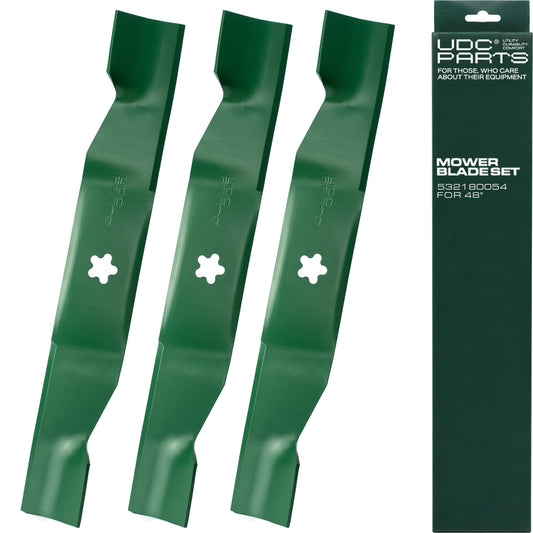
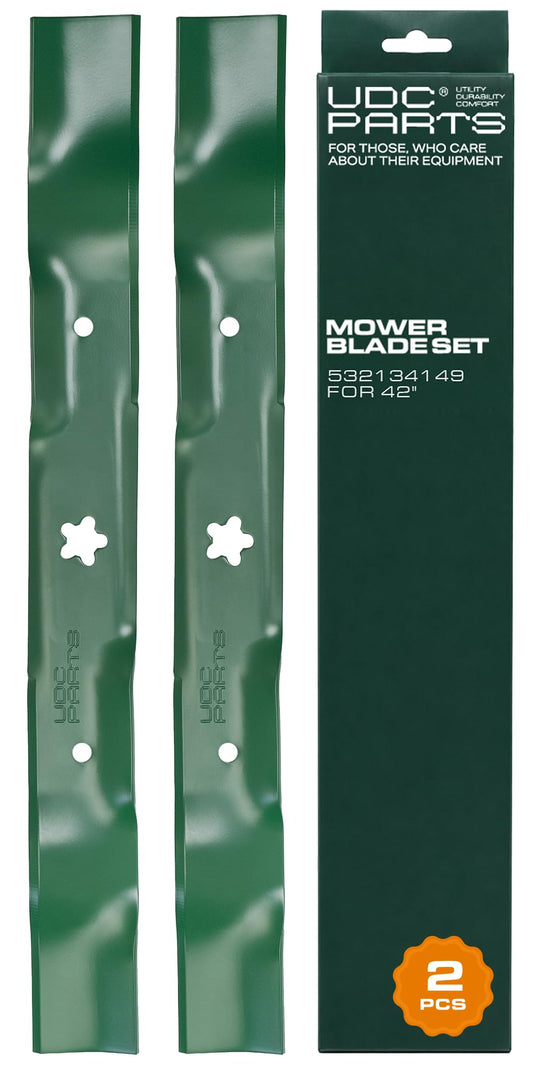
How to Choose the Right Mower Blade

Choosing a new blade can be quite a challenge and may even cause you to panic a little. Ultimately, they all look the same, but of course not all of them will fit your specific lawn mower model. Don't worry, we'll figure it all out. We will use various techniques, including lawn mower blade size chart and mower blade cross reference chart. With each new section, we will get closer and closer to solving the puzzle called: what size lawn mower blade do I need?
Lawn Mower Blade Size Chart
Notice: So, absolutely every spare part has a special OEM number. Knowing this number will make it much easier for you to search the internet, including our website. You can find it on the part itself or in the official user manual.
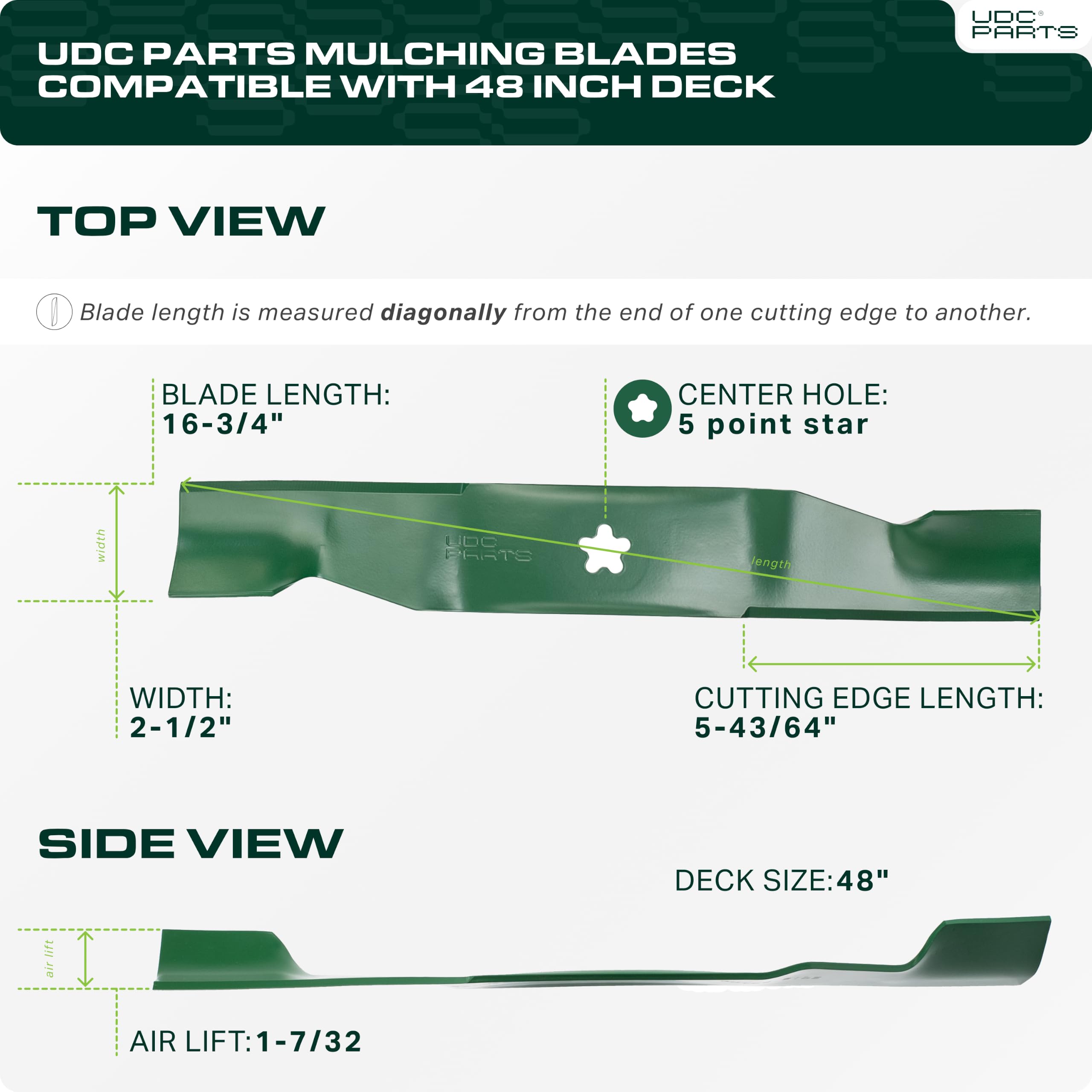
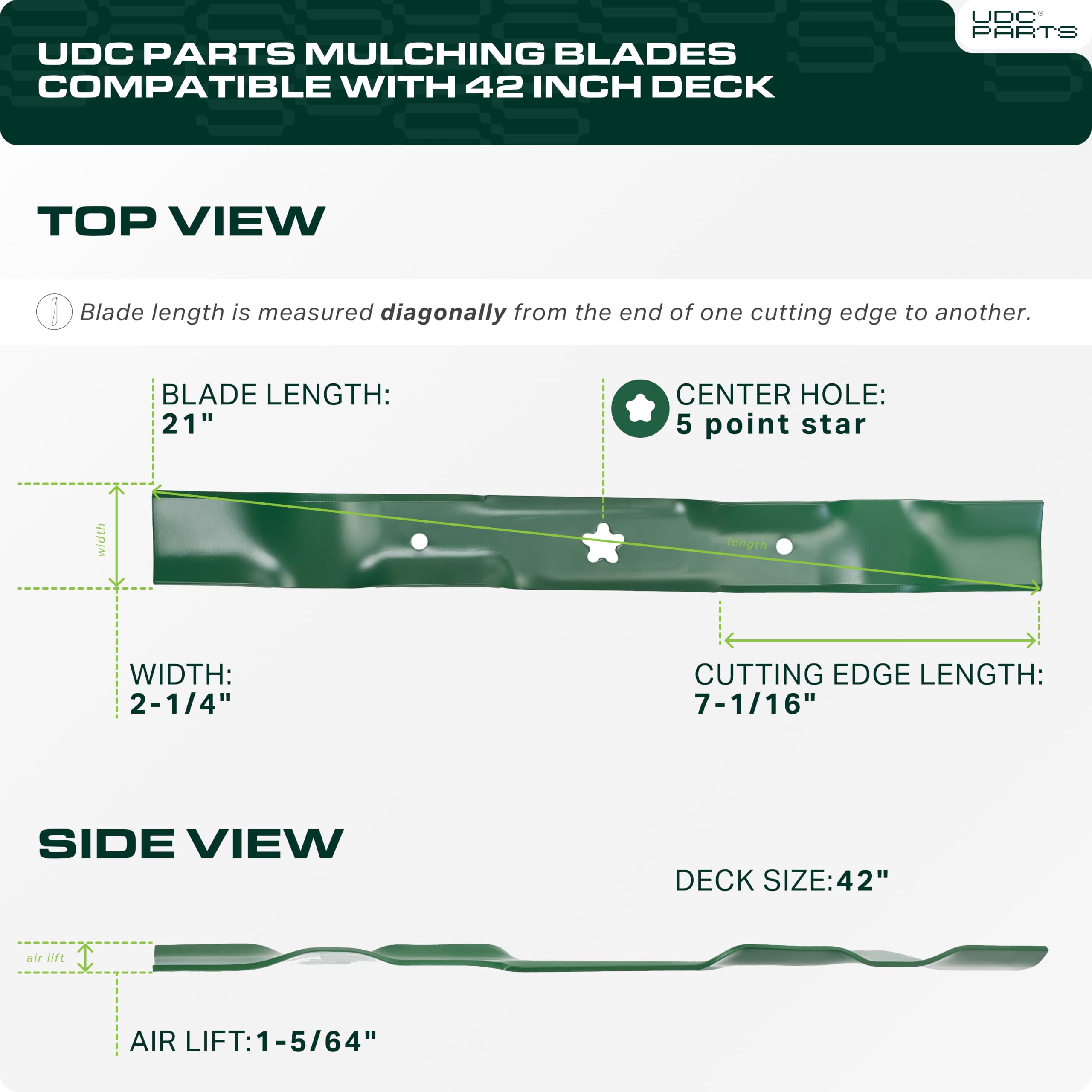
A more complicated option is to know the exact specifications of your spare part. And there aren't that many. It is important to know:
-
blade length
-
the format by which the blade is attached to the spindle assembly
This information will be extremely useful if you want to purchase high-quality aftermarket parts on this or another website. Or if you want to try a slightly different mowing format. After all, in addition to their basic characteristics, blades can also differ in type.
All blades are fixed in standard frames that they cannot exceed. Here is a list of mower blades by size in which they can be manufactured:
|
Deck size (inches) |
Typical blade length (inches) |
|
32", 48" |
16.5" |
|
36", 52" |
18" |
|
42" |
~21" (e.g., 21.18") |
|
61" |
21" |
|
72" |
24.5" |
As you can see, the length of the blade is also directly related to the size of the deck. At a bare minimum, the blade should not extend beyond its limits. And in general, manufacturers try to standardize the characteristics of their parts and make life easier for the average consumer. It can be said that the table you see above is quite accurate. If your lawn mower model is popular, the salesperson at the store may not even ask about its specifications. They will already know the blade size.
Mower Blade Measurements
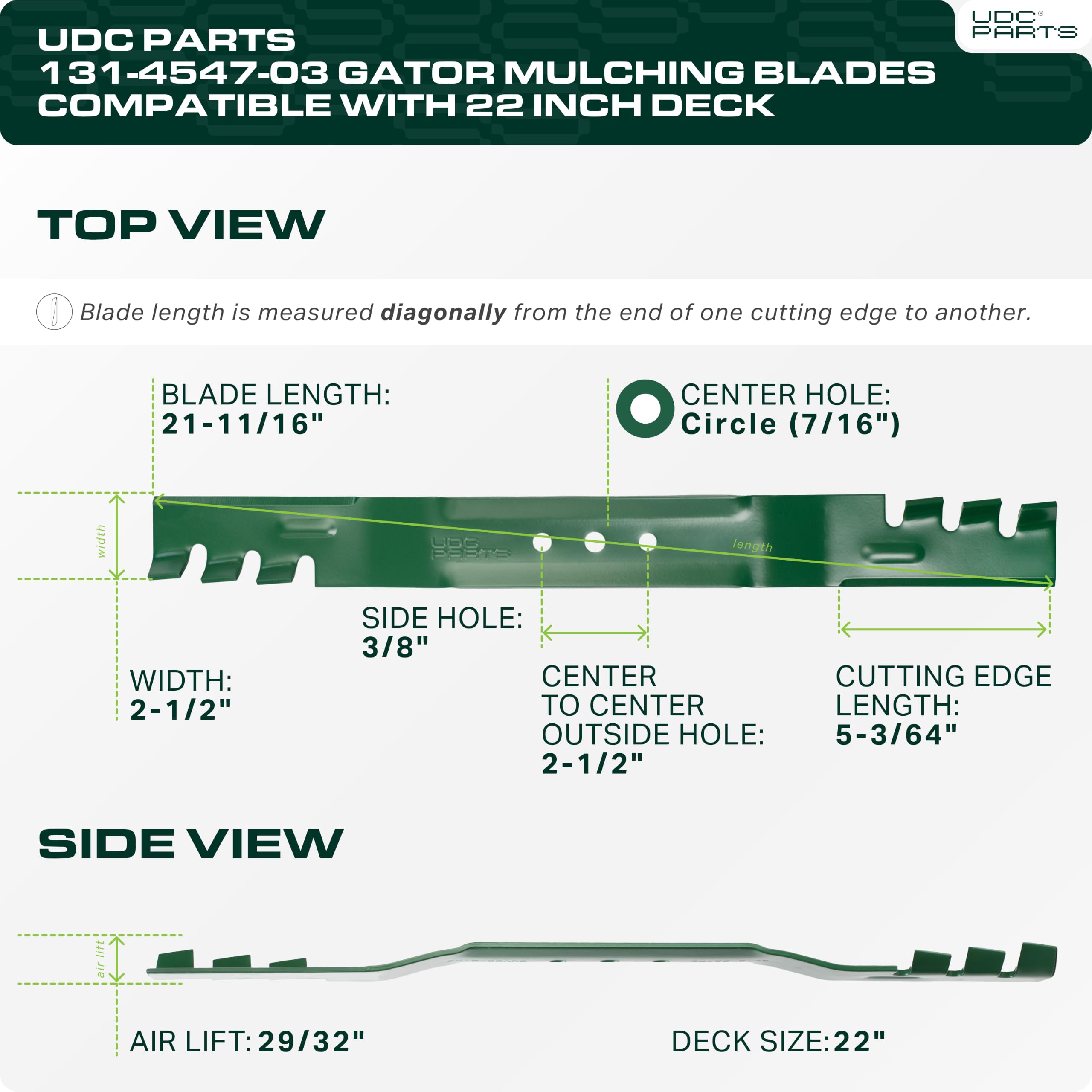
If we take absolutely all the parameters by which blades are measured, we will end up with four indicators:
|
Length |
To measure, simply measure the blade from edge to edge. It is best to perform this operation on a new one. The length of a used blade may vary significantly. |
|
Center hole |
The point of attachment to the spindle assembly. It can have different formats, including 5, 6, or 7 point stars. It can have an H-pattern or be a standard round shape. In the latter case, you need to know the exact diameter. |
|
Width and thickness |
Not a key parameter. Often, all blades for home use are around 2 inches wide. But if you are curious, you can still take the appropriate measurements. |
|
Outer holes |
In some cases, the design of the blades may differ from the standard, and in addition to the central hole, they may also have additional holes on the working surface itself. This parameter is not critical, but if necessary, you can measure the exact distance to the center to find an exact match. |
Notice: It is also essential to have the part number, the exact model name of your lawn mower, and the deck size handy. Combining this information will greatly simplify both physical and virtual searches. What's more, you'll be able to do it in a minute or so.
Blade Length
The length of the blade is undoubtedly the most important factor. The blade should fit comfortably under the deck, but at the same time it must be precisely adjusted to its dimensions. Otherwise, you may end up with uncut areas of your lawn after mowing. The easiest way to measure is to use a tape measure and pull it from edge to edge of the product. Please note that some blades may have sharp bends. You need to go around these uneven areas and take an accurate measurement.
Notice: we would like to remind you once again that it is best to do this with a blade that has never been used before.
Also remember that blades are spares that you will replace most often. The more you know about this component, the more confident you will be as a user, and you will also be able to combine different mowing options for your lawn.
Center Hole Type & Diameter
Let's take a quick look at the main types of center holes. There are actually quite a number of them, and it's easy to get confused without some preparation.
|
Round |
One of the simplest and most common types of center holes. However, there are quite a few sizes to choose from, which of course must be taken into account when selecting: 5/8“, 3/4”, 1“, 1/2”, and 13/16". |
|
5-Point Star |
This type of attachment is usually found on lawn mowers from less mainstream brands. |
|
6-Point Star |
This is common practice for popular brands such as Cub Cadet and Troy-Bilt. |
|
7-Point Star |
Used on a few, rather specific models. |
|
H-Pattern |
Versatile design that fits 5-point, 6-point, or triangular spindles. |
|
Rectangular/Rounded Rectangle |
More relevant for older models or very specific equipment. |
Lawn Mower Blade Cross Reference Chart
So, you can find an aftermarket replacement for any of your original parts. Using a special lawn mower blade cross reference chart, you can be almost certain of the correct replacement. What are we talking about?
For example, brands such as AYP, Craftsman, and Husqvarna often use 5-point star or 7-point star centers. And, for example, the Oregon 95-021 blade (21-3/4") replaces many 134768, 141114, and 157101 parts. Any manufacturer's website will indicate full compatibility with various models.
The place where you are now also supports this option. However, on our website, this procedure is simplified as much as possible because you can use the built-in selection tool. Let's say your model is Craftsman 414A. Select the brand and model in the appropriate fields and you will receive a correct offer that has already been checked for compatibility by our specialists.
This blade model also has its own serial number: 942-0741. Enter these numbers on the website to receive an identical offer. Our lawn mower blade cross reference is being done automatically. By the way, you don't have to dig under the deck to find this serial number. You can do it with a simple online search.
Of course, if you go to an old-school store, you will still need the blade length and center hole data. There's no way around it.
Are Lawn Mower Blades Interchangeable?
Are lawn mower blades interchangeable? Well, yes and no. The point is, they can be considered fairly simple and universal consumables. A single blade from UDC Parts can be fully compatible with five different brands and hundreds of models of equipment. However, the length, diameter/type of center hole are key characteristics that are best double-checked when purchasing, regardless of where you decide to make your order.
Mower Blades by Size vs by Model
Each of their two selection methods has its pros and cons. To jump ahead, both are correct.
-
Searching by size will give you a much larger selection. If necessary, you can experiment a little with that type of blade or even choose from all four varieties. And remember: length, center hole data — and you're good to go.
-
Searching by model limits you to certain parameters. You will only receive offers that experts deem appropriate. However, they cannot calculate all the options that you may need. This method is definitely the most reliable and also saves you valuable time.
These two methods are distinguished by the buyer's experience. The more experienced you become as a lawn mower owner, the more options you will want. This is a somewhat crude formulation, but it should be close to the truth.
Types of Lawn Mower Blades
This is a rather important indicator, which is not so easy to determine. The fact is that for a long time you may not know exactly what type you need and simply use the set that came with the equipment, for example. In fact, each area is unique and requires an individual approach. It is important for you to know what type of blades are needed for your lawn, and whether you need to replace them depending on the season.
Blade types:
|
Hi-Lift (bagging, side discharge) |
Versatile blades that are suitable for most conditions. They are really convenient for dealing with waste, whether it is collected in a bag or ejected sideways. |
|
Lo-Lift (sand) |
Used on lawns in dry regions and with sandy soil. Also simple if, for whatever reason, you need to mow at an extremely low height. |
|
Mulching blades |
These blades are designed specifically for decks with mulch baffles. The purpose of these mowers is to cut grass stems multiple times. This type of blade, in turn, offers increased turbulence. |
|
Gator blades |
Another type of blade that offers increased power. A good option for fall season, when you need to deal not only with grass on the lawn, but also with fallen leaves. |
You can learn more about blades by reading our dedicated, in-depth article on this topic.
Why Blade Compatibility Matters
For more than 5 years, we at UDC Parts have been selecting and standardizing aftermarket consumables. We listen carefully to our customers' feedback and have built our website so that you can make your selection in a matter of minutes. We offer about 50 brands and hundreds of unique spares that have been developed and manufactured in full compliance with the original.
Use the powerful search engine on our home page to find the part you need. You can be sure that it will fit securely into your equipment and will serve you reliably throughout its entire service life.
We are trusted not only by regular users, but also by large businesses that repair a high volume of equipment every day. By choosing UDC Parts, you are choosing reputation, quality, and fast delivery within 3 days.
How to Avoid Common Blade Selection Mistakes
Let's review the main points once again. You must know the following:
-
main technical parameters of blades
-
it's good to have a serial number handy
-
try to use mower blade cross reference as a backup
In addition to these two points, it is also important to install the blade correctly. Many users hastily remove the old blade and quickly replace it with a new one without looking. Before replacing the blade, be sure to pay attention to which way it is facing to avoid mistakes.
Notice: The curved part should face upward, toward the mower.
If you are an experienced user, balance the blades regularly or contact your nearest service center and you will be fine. Correctly selected and timely sharpened blades will give you one of the most beautiful lawns in the world.