Garden Tractor vs Lawn Tractor vs Riding Mower

So, the time has come and you've decided to buy or upgrade your old riding mower. Shopping centers and specialized websites offer hundreds of options that can really confuse you. But you need to start with the basics. You need to choose a specific side in the battle: garden tractor vs lawn tractor. It's actually quite simple.
Lawn tractors offer you exclusively lawn care services. They allow you to make high-quality and quick passes, strip by strip, bringing your lawn to perfection.
With a garden tractor, you get a multifunctional machine. It will still help you mow the lawn, but it can also do the following:
-
leaf removal
-
snow removal
-
fertilizer application
-
additional garden work
-
tow truck transportation
-
numerous attachments provide extensive customization options
Notice: If all additional work on your property is done by professionals, you can opt for a standard riding mower/lawn tractor. If you want to do everything yourself, go to the garden tractors section.
What Is a Lawn Tractor?
With lawn tractors, you get a fairly wide selection in the price range starting at around a thousand dollars. Take accurate measures of your lawn and choose a model with a deck that you will be comfortable with. They can range in size from 36 to 48 inches.
Note: On the one hand, the wider the deck, the faster you will get the job done. But there is a caveat: if your yard has a lot of gates and narrow passages, a wide deck will make your job incredibly difficult.
You need to make the same thoughtful choice regarding the fuel tank capacity. A 1.3-gallon tank is suitable for a half-acre yard, but if you have something larger, you will need a bigger tank. The same applies to electric models. Pay attention to their battery capacity.
If you have a really large plot of land, pay close attention to the suspension and seat type. They should be as comfortable as possible, otherwise working on the site will become a real pain. The type of steering is also important. Some models offer a simplified dual pedal system. Press forward to go forward, backward to go backward. Not having to use a manual transmission makes things way easier.
Also, check if it has a bumper. This might seem like a minor detail, but trust us, even a small bump into a tree in your yard can mess up your machine. That what is a lawn tractor basically is. A small, powerful machine, when choosing which you need to pay attention to about 5 parameters.
What Is a Garden Tractor?
In this lawn tractor vs riding mower battle let's go this way… If we disregard additional features, the main difference between a garden tractor and a ride-on mower is the location of the blades, which are positioned exactly in the center of the machine. This allows the garden tractor to perform confidently on lawns with any natural obstacles: trees, bushes, and any decorative plantings.
The position of the blades allows them to neatly go under them and mow the grass. This also requires a larger turning radius, but top brands such as John Deere and Husqvarna have learned to improve this aspect with their own innovative technologies.
So, what is a garden tractor? It can be quite an interesting machine packed with electronics. You can simply get info about the amount of fuel in the tank and even the belt rpm on the screen. The latest John Deere models have a special compartment with basic tools, and with the help of another brand-name technology, you can change the oil in 30 seconds. Or, for example, you can switch from collecting grass in a bag to side discharge at the touch of a button. Pretty cool, right?
Lawn Tractor vs Riding Mower
The difference between a lawn tractor and a riding mower, also known as a zero-turn mower, is significant in many ways. They perform similar tasks, but are very different in terms of design:
-
Mounting method. The first difference is how different the seating positions are on these two different types of equipment. With a zero-turn mower, thanks to its open platform, you literally just step on and you're in charge.
-
Maneuverability and speed. A riding mower is much easier to maneuver, and can reach speeds of around 16 km/h, which feels almost supersonic on the lawn. It would be difficult to repeat this trick on a tractor.
-
Handling. Here, there is a slight advantage in favor of the tractor, which offers mechanics that are familiar to any driver. In the case of zero turn, we are talking about levers that need to be operated quickly and quite skillfully. At least if you really want to mow the lawn quickly.
-
Features. Zero-turn mowers have a removable upper platform. This allows you to quickly check the condition of the belt, for example, as well as clean the internal components. Some tractor models have a cruise feature, which is not available on riding mowers.
-
Limitations. In the case of a lawn tractor, we are talking about all-season equipment that can be used for a bunch of tasks. In the case of a riding mower, we are limited to a specific season and focused exclusively on performing a single task.
To sum up this lawn mower vs lawn tractor battle:
-
Riding/zero turn mowers are more suitable for really large areas where speed and increased maneuverability are required. Tractors can easily handle smaller areas.
-
Tractors can also help with additional tasks, including snow removal and cargo transportation, if the model is equipped with the appropriate attachments.
Garden Tractor vs Lawn Tractor
Garden tractors are always larger, with a wider wheelbase, larger wheels, more powerful engines, and more serious cooling technology for those engines. They also weigh almost twice as much. These are more advanced machines, both technically and in terms of the work they perform.
Notice: How can you tell a garden tractor from a lawn tractor with absolute certainty? For the first type, the manufacturer always offers numerous ground engaging implements: tillers, plows, cultivators. Also pay attention to the wheels: in the case of a garden tractor, a lug nut is usually used to attach the wheel to the axle. In the case of lawn tractors, a simple cap and clip system is usually used.
With a garden tractor, you can get other benefits as well. For example, a huge deck up to 60 inches. Or a rear locking differential on select John Deere models. If you feel the rear wheels starting to slip, you can make them work simultaneously. This can be extremely useful when clearing snow or moving heavy loads.
Meanwhile, basic lawn tractor models are essentially designed to perform two functions: mow the grass and pull a small wain behind them. That is the most accurate definition of what they do. And it's actually quite suitable for a huge number of users.
Notice: Pay attention to the engine manufacturer for any type of equipment. Large shopping centers often offer attractive prices. They compensate for this with engine options from Briggs & Stratton. Meanwhile, experts prefer more reliable options, such as those from Kawasaki.
That is basically all you need to know about lawn tractor vs garden tractor battle.
Garden Tractor vs Riding Mower
After reviewing the previous comparison, you can already answer the question of what type of equipment you need. But let's take a closer look at the battle of garden tractor vs riding mower.
You will need a garden tractor if you have heavy-duty tasks, and mowing the lawn is just one of them. However, it is technically impossible to do anything other than mow the lawn with a riding mower. You simply cannot attach any additional accessories to this type of equipment.
The choice is obvious and will depend entirely on your tasks. The only thing that might stop you from buying one is the price. Tractors are still significantly more expensive than riding mowers. On the other hand, entry-level tractor models may cost as much as advanced riding/zero-turn models, so a compromise can be found in this case.
Comparison Table
Difference between lawn tractor and garden tractor and riding mower:
|
Feature |
Riding Mower |
Garden Tractor |
Lawn Tractor |
|
Primary use |
Cutting grass only |
Heavy duty tasks and grass cutting |
Grass cutting + light towing |
|
Engine power |
Small engines (12 - 20 HP) |
Larger engines (20 - 30+ HP) |
Mid-range options 15–25+ HP |
|
Cutting deck size |
30 - 46 inches |
48 - 54+ inches |
42 - 54+ inches |
|
Attachments |
Mulching bag |
Wide range (snow pillers, wagons, tillers) |
Moderate (pushcarts, snow blowers) |
|
Transmission |
Lighter-duty |
Heavy-duty, often hydrostatic |
Hydrostatic or manual. For tasks of medium complexity. |
|
Durability |
For small/medium lawns |
For Large area and difficult terrain |
Large lawn, mild slopes |
|
Price range |
Lower cost, budget-friendly |
Higher cost, premium investment |
Mid-range |
Which One Is Right for Your Needs?
Here are a few important things to keep in mind when picking out equipment:
-
the actual area of your plot
-
the scope of tasks you intend to perform
-
season for performing these tasks
-
plans for residential lawn mowing
-
and, oddly enough, your driving skills (zero-turn mowers do have specific handling)
-
budget
Based on this data, we can come to the following:
-
limited budget/small plot — riding mower
-
medium-sized area/moderately difficult work — lawn tractor
-
large area/heavy tasks — garden tractor
Why Equipment Type Matters for Parts and Maintenance
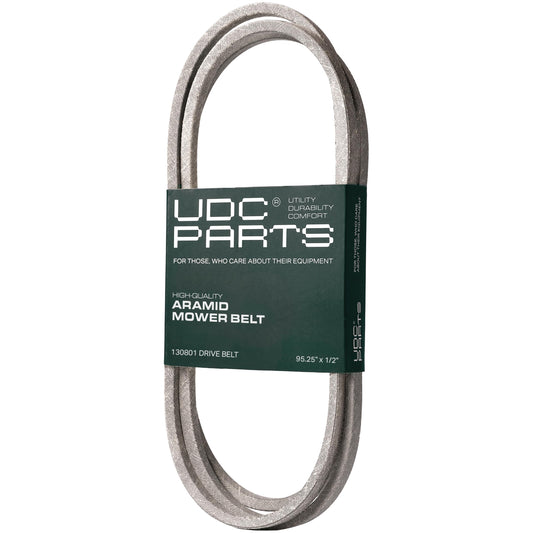
Complex technology and more difficult tasks automatically mean more expensive components and more expensive replacements. In this context, riding mowers are the most attractive option. Replacing blades, belts, and filters can easily cost a hundred dollars. With garden tractors, however, with their heavy-duty transmissions and engines, it will be much more difficult to stay within this budget. Keep this factor in mind when purchasing and planning your budget.
At UDC Parts, we are always ready to support you with high-quality OEM consumables. We always have thousands of options in stock for nearly any model of equipment. You can quickly navigate to the relevant section of the catalog using the following links:
We wish you a quick and successful selection of new equipment. Mow and enjoy nothing but happy emotions.